

Matchbook Merch.
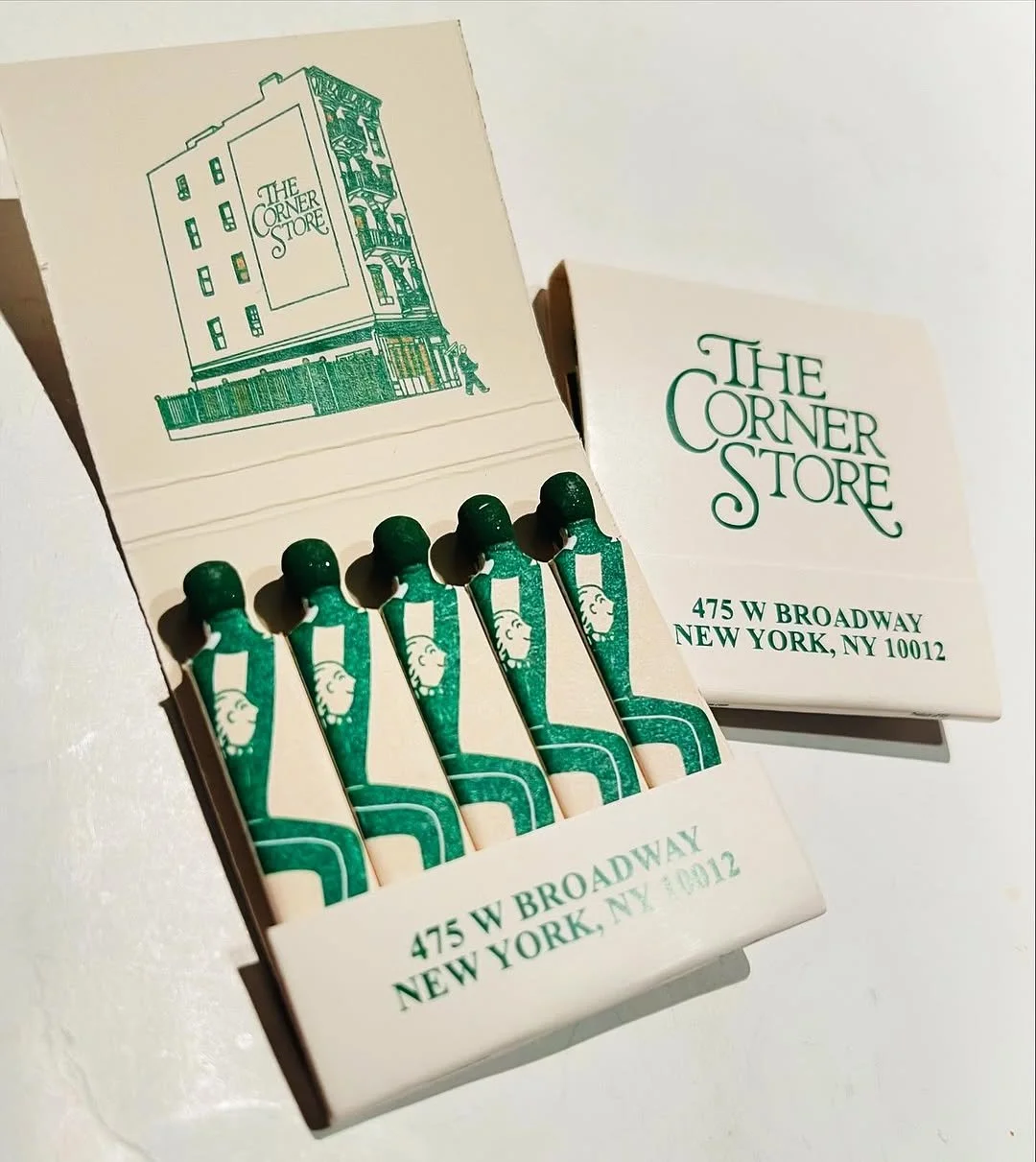
Getting a reservation at NYC’s The Corner Store is practically impossible. The matchbook makes it all worth it.
Restaurants have become some of the most disciplined brand designers in the world.
Not hospitality groups with global merch machines; I mean just restaurants.
If you walk into the right place — whether in NYC or Louisville — you’ll find objects that people actively want to take home: matchbooks, hats, totes, ashtrays, coasters. Small things, mostly inexpensive things. But things designed with a level of care that most consumer brands reserve for their flagship products.
For marketers, there’s a lesson hiding in plain sight.
The oldest marketing channel in the room
When I worked at Brown-Forman, there was a saying about great point-of-sale materials: the goal was for someone to steal it.
If a bar patron liked a matchbook or a coaster enough to slip it into their pocket, we knew we’d succeeded. The object had crossed an invisible threshold. It was no longer a marketing asset. It had become part of someone’s life.
The idea itself is hardly new. Matchbooks have been doing this job for more than a century.
In the early 1900s, companies like Diamond Match Company turned matchbooks into one of the first mass advertising formats. Hotels, airlines, nightclubs, and restaurants printed their names on them and scattered them across bars and tabletops. They were cheap, portable, and oddly collectible. By the mid-20th century, Americans were taking home billions of them each year.
The objects worked because they traveled. A matchbook from a restaurant in Chicago might end up on a coffee table in Detroit. A bar’s coaster could sit in someone’s apartment for weeks. Long before digital reach metrics existed, these items created a physical distribution network for brand memory.
Then, somewhere along the way, most companies stopped trying to make these objects desirable.
Restaurants didn’t.
The restaurant as brand atelier
Today, some of the most coveted brand objects come from restaurants that treat merchandise as an extension of the experience.
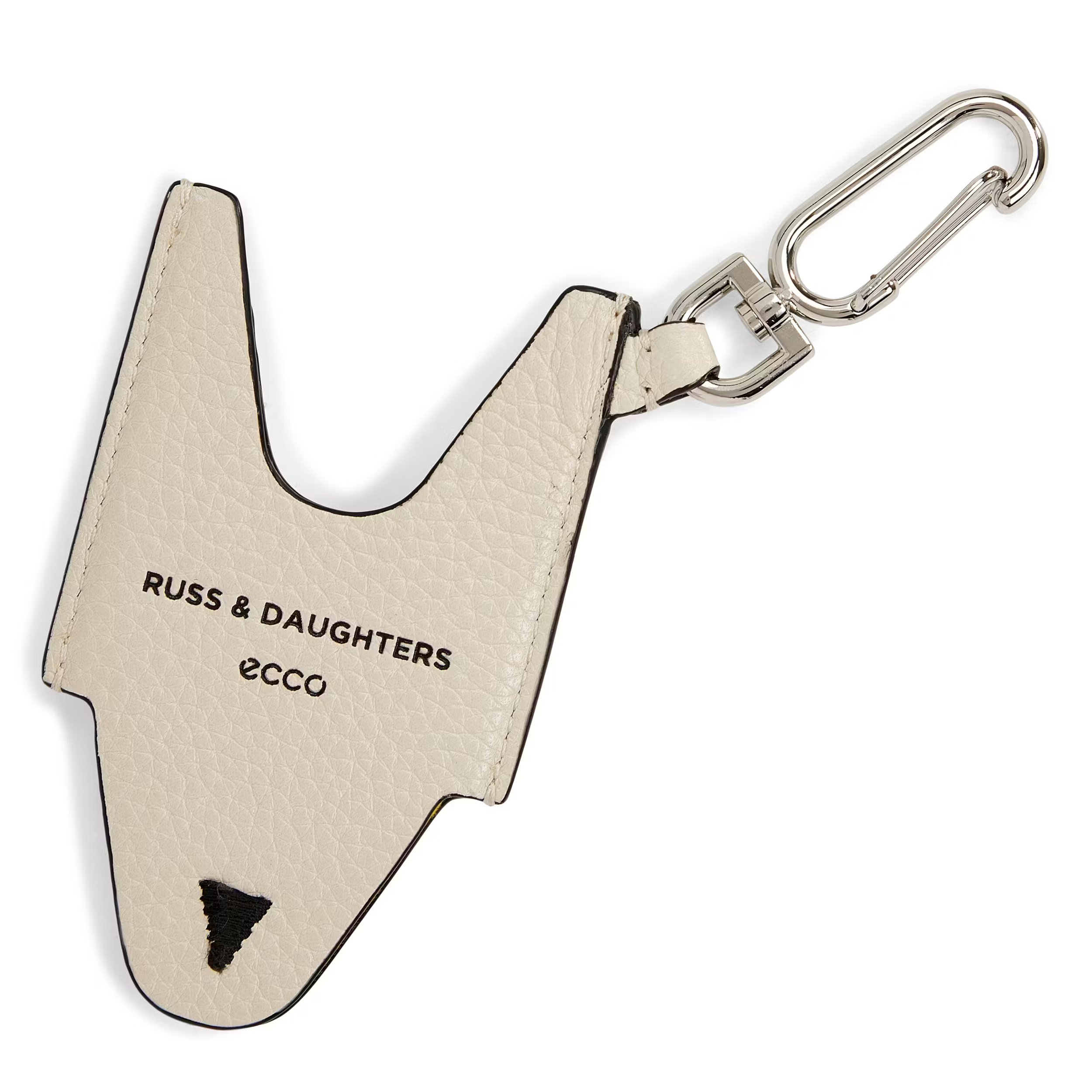
I’m obsessed with this Russ & Daughters x ECCO “Take A Number” keychain slash luggage tag.
Consider Russ & Daughters in New York. Their navy canvas tote—printed with the shop’s historic typeface—functions almost like a cultural credential. Carrying one signals that you understand the mythology of the Lower East Side appetizing store. It’s less a grocery bag than a piece of New York lore.
Or the hats from Fish King in Glendale, California. The graphics feel straight out of mid-century West Coast commercial signage. They look authentic because they are. People wear them the way they might wear a vintage surf brand.
New York’s Corner Store—a restaurant that opened with a fully formed aesthetic world—produces matchbooks that circulate through the city like tiny calling cards. You see them on nightstands, in jacket pockets, on restaurant tables across town.
Even restaurants that have grown into global brands keep the same logic. Balthazar sells classic brasserie merchandise—caps, aprons, bags—that feel like artifacts from a Parisian café. St. John in London has built an entire retail arm around the stark typography and institutional white aesthetic that defines the restaurant itself.
None of these objects look like conventional “merch.”
They look like they belong to a world.
Designing for desire, not awareness
That distinction is where restaurants often outperform traditional marketing departments.
Many brands design merchandise as a visibility exercise. The brief is essentially: make something with the logo on it. The result is predictable—golf shirts, water bottles, conference tote bags. Perfectly functional. Rarely loved.
Restaurants tend to approach the problem differently. Their merchandise is treated as part of the environment.
The typography on the matchbook matches the menu.
The color palette mirrors the room.
The tone of the graphics reflects the personality of the place.
It’s the same logic that governs lighting, plating, music, and uniforms. Every detail contributes to a coherent atmosphere. Merchandise simply extends that atmosphere into the outside world.
That coherence is what makes the objects feel authentic. They don’t look like advertising because they weren’t conceived as advertising.
They were conceived as artifacts.
The power of the earned object
There’s another structural advantage restaurants have that most marketers overlook: access.
You usually can’t buy these objects unless you’ve been there.
You have to eat at Via Carota to leave with one of their coveted tote bags. You have to sit at the bar at the right place to pocket the matchbook. You have to make the pilgrimage.
That constraint transforms the object into proof of experience. The tote or hat becomes a subtle signal that you were part of something people talk about.
In sociological terms, the object carries what Pierre Bourdieu would call cultural capital. In simpler terms, it’s an “I was there” marker.
Which is why people happily advertise the brand for free.
A Russ & Daughters tote walking down Broadway does more cultural work than a banner ad ever could. It signals taste, not consumption.
Why marketers should pay attention
For marketers working outside hospitality, this model is surprisingly portable.
The real lesson isn’t “make merch.” Most companies already do that. The lesson is to think about brand objects as cultural artifacts rather than promotional tools.
Restaurants succeed because they design items people would want even if the logo weren’t there.
They also distribute them in ways that create meaning. You don’t get the object by clicking a retargeted Instagram ad. You get it by participating in the brand’s world.
The result is a kind of voluntary media network: customers walking around with objects that carry a story, an aesthetic, and a memory attached to them.
No influencer contracts required.
The small object renaissance
Interestingly, the humble matchbook is the most elegant version of this idea.
A small company called The Match Group produces custom matchbooks for restaurants, hotels, and brands. Many of them are beautifully designed—tiny pieces of graphic design that feel closer to collectible ephemera than advertising collateral.
In an era where most marketing exists inside a phone, a well-designed physical object has a different kind of power. It occupies space. It gets rediscovered in drawers and pockets. It sparks conversation.
And it travels.
Which brings us back to that old Brown-Forman metric: if someone steals it, you probably did something right.
The ideal brand object doesn’t beg for attention.
It earns a place in someone’s life.
Further Reading
Meet the Designers Behind All the Coolest Restaurant Stuff Bon Appetit, 2022
2024 Was a Ravenous Year for Restaurant Merch Vogue, 2024
