

The Business of Dragons and Desire
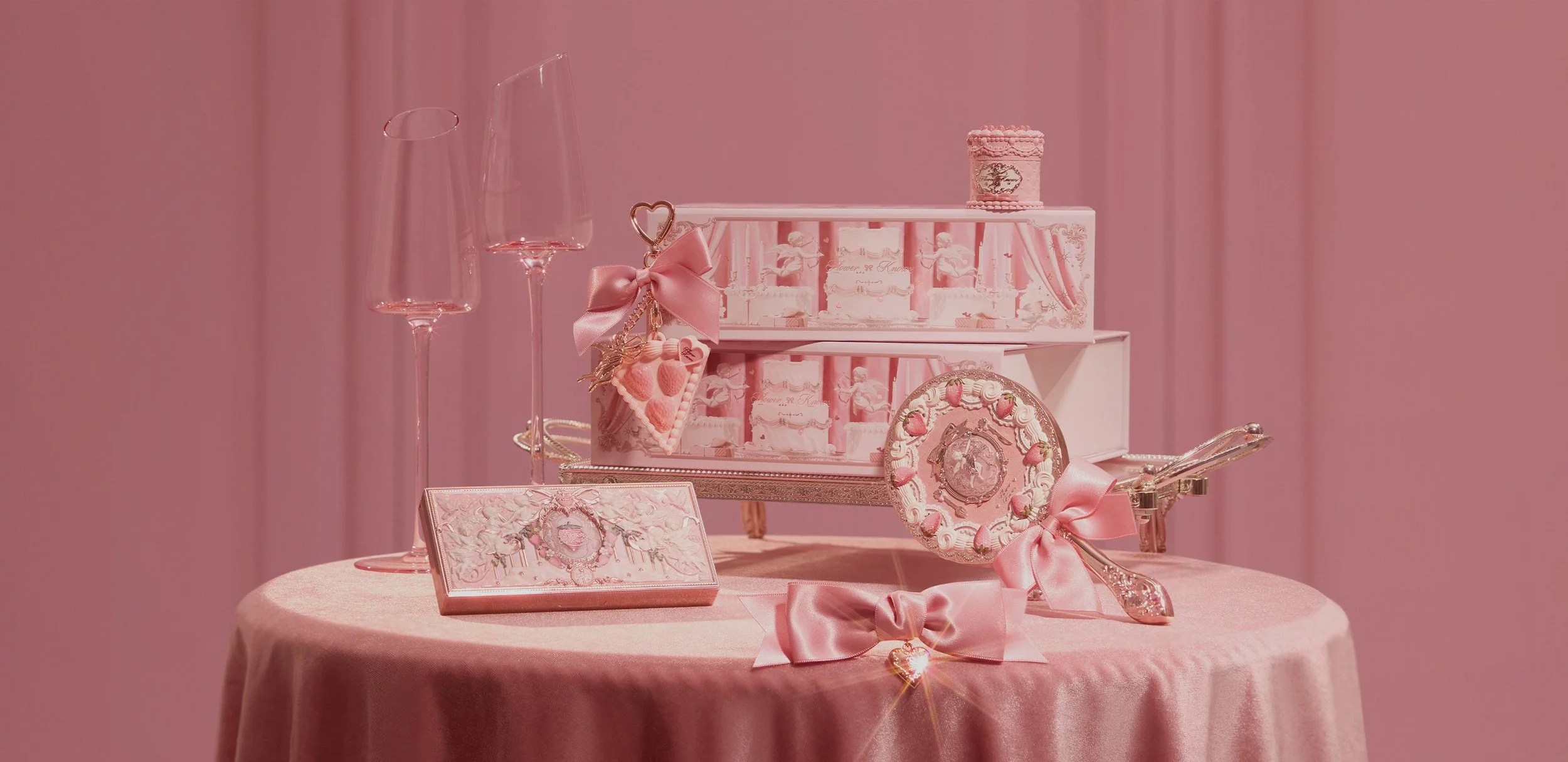
Photo credit: Flower Knows.
Romantasy—romance plus fantasy—has quietly become one of the most powerful cultural trends of the past few years. What started as a niche corner of BookTok is now influencing everything from publishing to fashion to beauty packaging. And like most major cultural waves, it tells us something deeper about the moment we’re living in.
Over the last two years, romantasy has exploded into the mainstream. Rebecca Yarros’ Fourth Wing became one of the fastest-selling adult novels in recent memory, with its sequel Iron Flame breaking pre-order records. Sarah J. Maas’s A Court of Thorns and Roses series, first published in 2015, has found a massive second life through TikTok, selling millions of new copies years after its debut. Bookstores now dedicate entire tables to the genre, and major studios are racing to adapt these stories for screen.
But the trend doesn’t stop at books.
You can see the romantasy aesthetic rippling through other parts of culture:
Television: Series like House of the Dragon and The Witcher have leaned heavily into lush medieval worlds where political intrigue and intense romantic dynamics coexist.
Fashion: Runways from designers like Simone Rocha and Dilara Findikoglu have embraced “medievalcore” and fairytale silhouettes—corsetry, lace, chainmail-inspired textures, and dramatic gowns. On social media, aesthetics like “princesscore” and “fae dressing” regularly go viral.
Beauty: Korean beauty brand Flower Knows has built a cult following with elaborate packaging that looks like it came from an enchanted vanity—powders housed in jewel-like compacts, lipsticks shaped like artifacts from a storybook kingdom.
Retail: Even mainstream retailers like Urban Outfitters and Anthropologie are leaning into fantasy-coded fashion—flowing dresses, corsets, velvet textures, and ornate details.
So why now?
The Origins of the Romantasy Wave
Romantasy didn’t appear out of nowhere. It evolved from several overlapping forces.
First, there’s the legacy of early 2000s fantasy culture. Millennials grew up with Harry Potter, The Lord of the Rings, and later Game of Thrones. Those stories normalized sprawling worlds, intricate lore, and epic emotional stakes. Romantasy essentially merges that world-building tradition with the emotional focus of romance novels.
Second, there’s the influence of digital communities. TikTok—and BookTok in particular—has fundamentally changed how books spread. Instead of traditional literary gatekeepers, passionate readers now drive discovery. Emotional reactions, fan edits, and aesthetic mood boards have propelled romantasy titles to viral status.
Third, the genre taps into a long tradition of female readership in fantasy-adjacent romance. For decades, paranormal romance and urban fantasy quietly dominated sales charts. Romantasy is, in many ways, the mainstreaming of those audiences.
Escapism in an Age of Instability
Cultural trends rarely emerge in a vacuum. The rise of romantasy coincides with a period marked by pandemic disruption, economic uncertainty, political polarization, and ongoing geopolitical conflict.
In unstable periods, audiences often turn toward narratives that provide both escape and emotional intensity. Romantasy offers both.
Unlike pure escapist fantasy, romantasy foregrounds relationships, longing, and personal transformation. The stakes are simultaneously epic and intimate: wars between kingdoms alongside slow-burn romance arcs.
There’s also a psychological component. In times when real-world systems feel chaotic or impersonal, stories built around clear destinies, moral struggles, and powerful bonds can feel deeply satisfying. The worlds may be fictional, but the emotional journeys are intensely human.
The Aesthetic Shift: From Minimalism to Myth
The rise of romantasy also aligns with a broader aesthetic shift happening across culture.
For the past decade, branding—especially in tech and startups—has leaned heavily toward minimalist design: neutral palettes, sparse typography, restrained visual systems. The aesthetic language was calm, rational, and optimized.
But increasingly, audiences are gravitating toward the opposite: richness, ornamentation, texture, and narrative symbolism.
The popularity of medieval-inspired fashion, ornate beauty packaging, and fantasy-coded visuals reflects a broader appetite for visual storytelling and aesthetic maximalism. People want things that feel immersive and emotionally charged, not just clean and efficient.
What This Means for Brands
For companies paying attention, the romantasy wave offers a few clear signals.
1. World-building matters.
The most compelling brands increasingly feel like universes. Think about how brands like Diptyque, Loewe, or Santa Maria Novella construct rich narratives around their products. Romantasy culture reinforces the power of lore.
2. Emotion is beating irony.
For years, brand voice leaned toward clever detachment and self-aware humor. But audiences—especially younger ones—are responding strongly to sincerity, drama, and emotional stakes.
3. Aesthetic richness is back.
Intricate visuals, mythic symbolism, and ornate design are resonating in ways stark minimalism no longer does.
4. Narrative beats product.
People don’t just want to buy things—they want to participate in stories.
None of this means brands should suddenly start putting dragons on their packaging. But the cultural momentum behind romantasy signals a larger shift: audiences are hungry for imagination, emotional depth, and worlds they can lose themselves in.
In other words, the future of branding may look a little less like a startup pitch deck—and a little more like a well-crafted saga. Dragons optional. 🐉
