

Method Marketing: Why Brands Need an Opening Weekend Mentality.
A24
We’ve all heard of Method Acting, the process where an actor fully immerses themselves in a role, inhabiting a character’s world long after the cameras stop rolling.
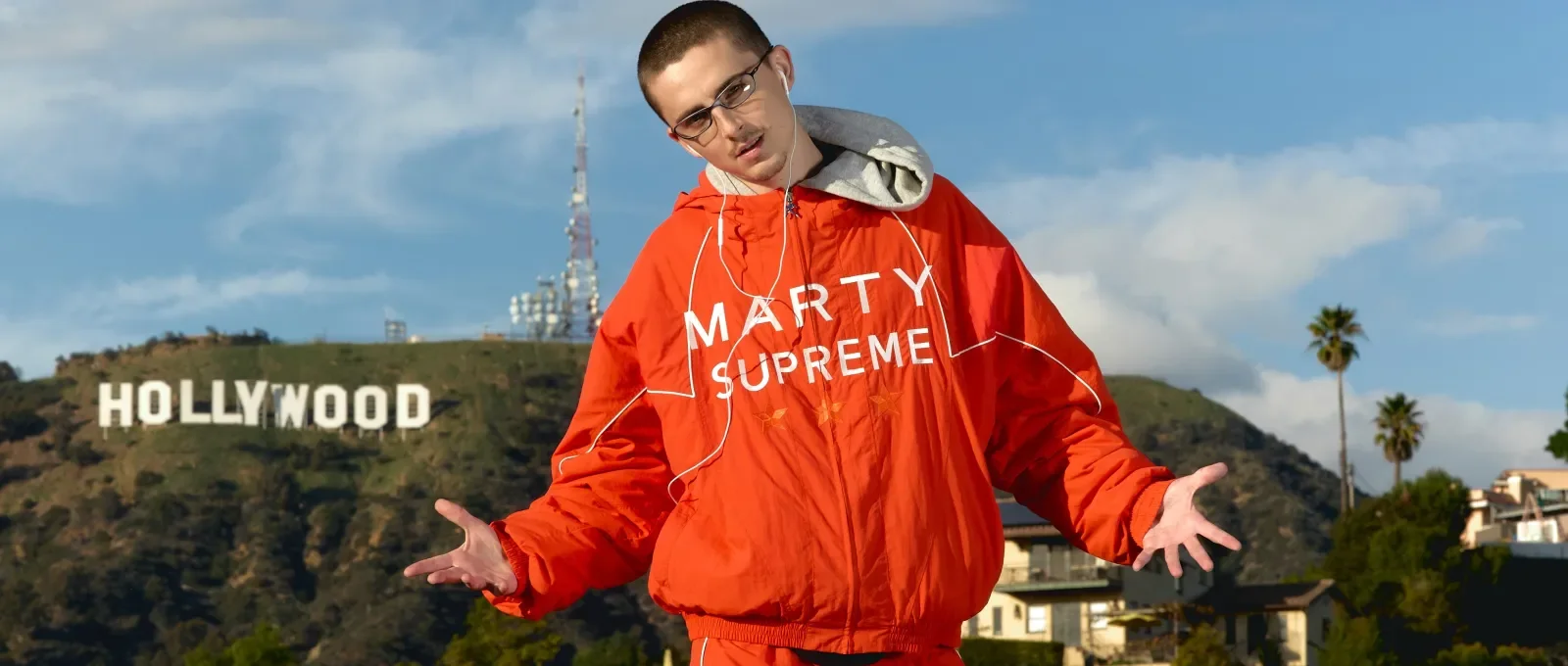
But as I watched the rollout of Marty Supreme in the weeks leading up to its hugely successful Christmas Day debut, I realized we are witnessing a fantastic example of Method Marketing.
The campaign was inescapable. It wasn't just a trailer on a screen; it was an orange blimp in the sky, courtside at NBA games, and seemingly everywhere else. It made me realize that while modern businesses are built on the luxury of iteration, Hollywood still operates on the high-wire act of the "Big Bang."
The "One-Shot" Reality
In the world of business, we are taught to value the pivot. If a software feature doesn't land, we patch it. If a snack brand’s packaging feels off, we A/B test a redesign. We have the safety net of "Version 2.0."
Movies don't have a Version 2.0.
Once the theater lights go down on opening night, the product is fixed. You cannot re-edit a movie based on the first weekend’s exit polls. This creates a marketing culture of absolute commitment. When you only have one shot to land a cultural blow, you don't just run ads—you create an environment.
The "Glitch in the Matrix" Stunt
Perhaps the most Method moment of the Marty Supreme campaign was the 18-minute fake Zoom meeting.
The team "leaked" a meeting link that appeared to be a standard corporate call. Thousands joined, only to find themselves watching an 18-minute, immersive, and increasingly surreal piece of performance art that felt like a window into the movie’s universe.
It wasn't a commercial. It was a disruption. By forcing the audience to participate in the mundane medium of a Zoom call, they turned a routine business tool into a narrative device.
Icons of Method Marketing
To understand how to apply this "all-in" mentality, we have to look at the campaigns that treated the real world as their stage:
The Blair Witch Project (1999): They didn't market a horror movie; they marketed a "missing persons" case. By setting up a website with fake police reports and missing posters, they stayed in character so convincingly that audiences entered the theater believing the footage was real.
The Dark Knight (2008): The "Why So Serious?" campaign invited fans into an alternate reality. Fans received "Joker-ized" dollar bills and followed clues to find hidden phones. It wasn't about the film’s plot; it was about making the audience feel like citizens of Gotham.
Barbie (2023): "Barbiecore" was Method Marketing at a global scale. From a real-life Malibu DreamHouse on Airbnb to 100+ brand collaborations, the goal wasn't just to sell a ticket—it was to turn the entire world pink.
Lessons for the Iterative Brand
How can a brand—whether you're selling a subscription service or a consumer good—adopt the "Method" mindset without a $100M budget?
1. Own a "Physical Glitch" Movie campaigns succeed when they show up where they don't belong (like the floor of a professional basketball game or a random Zoom link). When a digital-first brand creates a tactile, physical moment—or a physical product creates a digital mystery—it breaks "scroll-blindness."
2. Stop Announcing, Start Inhabiting Too often, we treat a launch like a status update. "Method Marketing" treats it like a shift in reality. Instead of listing features, ask: What does the world look like now that this product exists? Create content that assumes the product is already a cultural staple, which takes commitment and confidence (incidentally two core principles of my marketing philosophy).
3. Build a "Crescendo" Mentality The safety of iteration often leads to "leaking" products out. But there is massive equity in the coordinated strike. By aligning every channel—social, physical, and digital—to hit at the same moment, you create a sense of inevitability that a slow-drip campaign can never achieve.
The Takeaway
While the ability to pivot is a commercial blessing, it can be a creative curse. It allows us to be tentative and insecure.
The next time you’re preparing a launch, ask yourself: "If I didn't have the ability to fix this in six months, how would I market it today?" When you market like you only have one weekend to win, you stop being a brand and start being an event.
