

I want to buy Rachel Sennott’s TikTok algorithm.
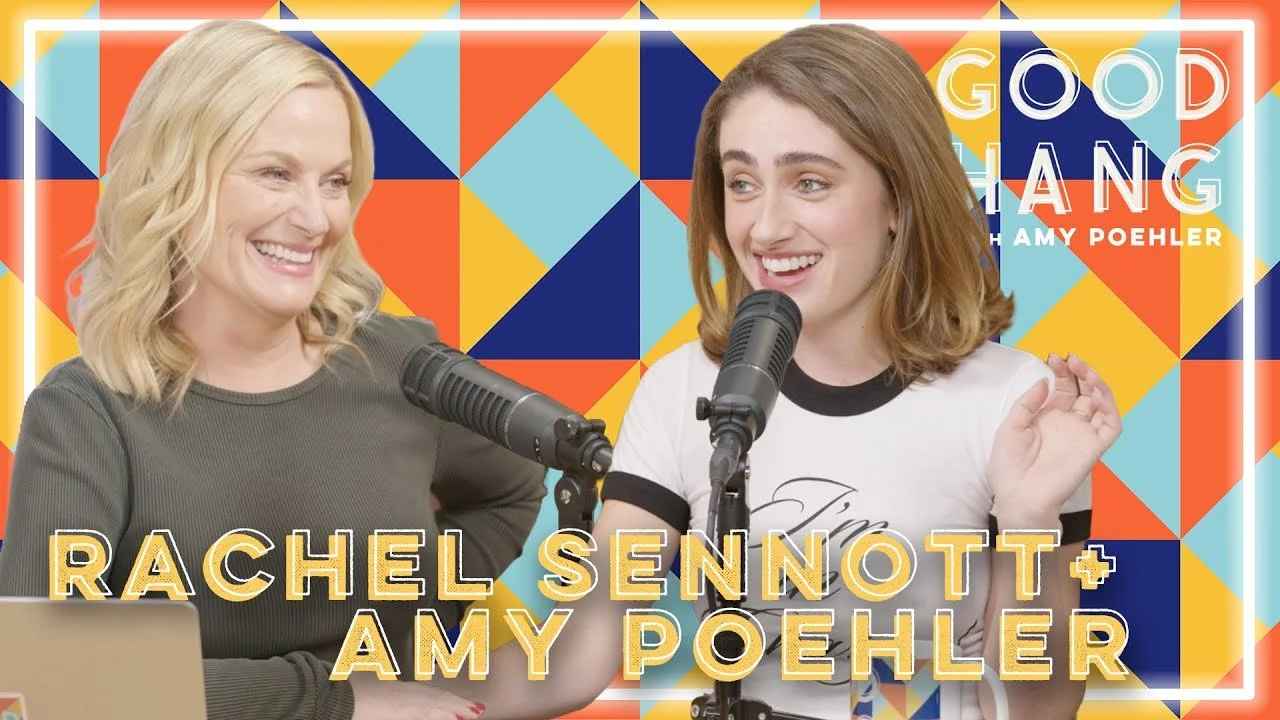
Rachel Sennott schooled Amy Poehler on the virtues of TikTok as a source of creative inspiration on this week’s episode of Good Hang.
I spent part of my week listening to Rachel Sennott on Amy Poehler’s podcast, Good Hang. If you aren’t familiar with Sennott, she is effectively the final boss of being online. She is hyper-aware, pop-culturally fluent, and deeply embedded in the digital zeitgeist. Her new show, I Love LA, is positioned to be the Gen Z successor to beloved Millennial time capsule GIRLS, which the world has been waiting for ever since GIRLS wrapped in 2017.
As she and Amy discussed her obsession with TikTok, a thought hit me. I would pay money to see exactly what Rachel sees.
I don’t just mean I want to see her posts. As a marketer, I want her For You Page. I want the specific and high-speed stream of information that the TikTok algorithm has curated specifically for her brain — because I have a feeling it’s influencing my clients’ Gen Z consumers’ feeds as well.
If I want it, I bet every major brand on the planet wants it even more.
The Shift: From Following People to Following Engines
For the last decade, the Creator Economy has been built on output. We follow influencers to see what they produce, whether that involves their photos, their vlogs, or their "Get Ready With Me" videos.
As the internet becomes more fragmented and algorithms become more sophisticated, the most valuable part of an influencer isn't just what they produce. It is what they consume.
We are entering an era where an influencer’s algorithm is their intellectual property.
Why Your FYP is a Gold Mine for Brands
Brands spend billions every year on trend forecasting and sentiment analysis. They hire consultants to tell them what is cool or what the next big "core" aesthetic will be.
However, a trend forecaster is often just someone looking at the world through a rear-view mirror.
A chronically online person like Rachel Sennott has an algorithm that acts as a real-time radar. Her feed is giving her the pre-viral state of culture. If an advertiser could plug into her feed, they wouldn't just be seeing content. They would be seeing the future of consumer demand before it even has a name.
Algorithm as a Service (AaaS)
I have no idea what the technical mechanics would look like in practice. It might involve a browser extension, a mirrored API, or a view-only license to a curated data stream. Regardless of the method, the business case is clear.
Imagine a world where:
A Beauty Brand pays a license fee to a Gen-Z makeup artist to see what niche creators are bubbling up.
A Film Studio subscribes to the algorithm of a top film critic to see which indie movies are gaining organic traction.
Market Researchers move away from focus groups and instead study "Seed Algorithms" to understand the psyche of different demographics.
The New Digital Influence
We have spent years talking about the "Filter Bubble" as a negative thing. We view it as a way we get trapped in our own echo chambers. In a professional context, a filter bubble is just another word for expertise. If you are a master of your craft or a titan of pop culture, your filter bubble is a high-value asset. It is a curated and AI-driven lens that filters out the noise and highlights the signal.
Rachel Sennott’s TikTok feed isn't just a way to kill time. It is a roadmap for where the culture is going next. In the near future, the most successful influencers might not sell you a product. Instead, they will sell you their eyes.
